What Makes a Great Hack: How Jurors Choose Winning Projects
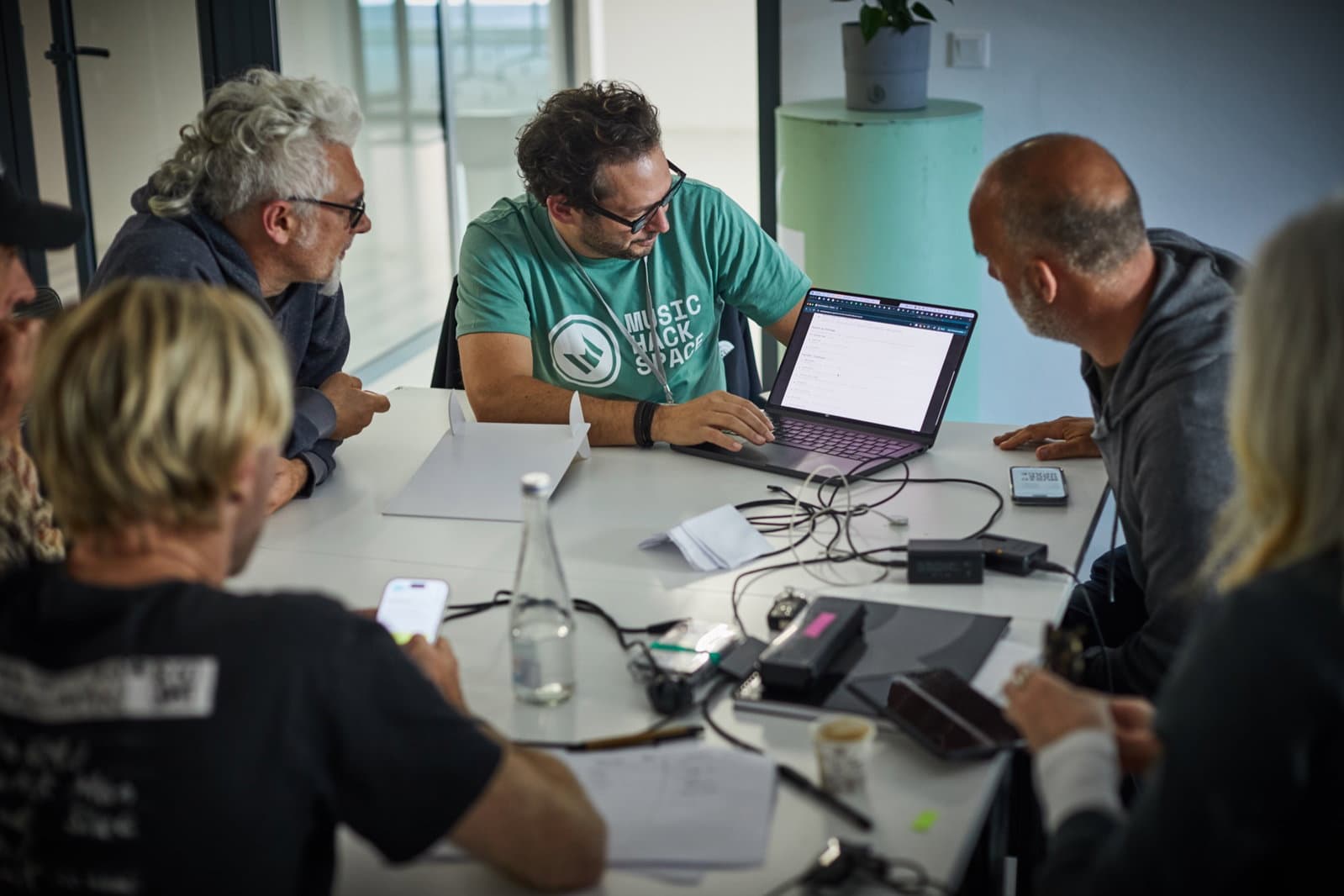
Every Music Hackspace hackathon ends the same way: a room full of expectant, over-caffeinated builders, a handful of expert jurors, and a question hanging in the air: who won?
Along with the final demos, the winners announcement is the most exciting part of the event; but sometimes it is also the most mysterious. From the outside, judging can look like a black box. A team pours hours into a remarkable project, walks off stage, and waits. So let's open the box, so you'll know exactly what our jurors are looking for.
Ahead of our Montréal hackathon, the hackspace team sat down to refine exactly how our jurors score projects. We wanted criteria that reward the right things: real invention and artistic ambition. Here's what we landed on, and how our hackathons will also be judged into the future.
We score four things
Our jurors mark every project against four criteria. Three of them carry equal weight. The fourth, deliberately, carries half.
1. Product–market fit
Does the entry solve a real problem for music makers? Is there an obvious place for it in today's music-tech landscape?
The best hacks answer a genuine need that producers, performers, educators or listeners have. When a juror sees a project, they're asked to consider: who is this for, and would they use it in their workflow? Might a music maker reach for this tool again and again? (This is a good time to listen to the musicians and artists on your team!)
Commercial viability is a key consideration. If a hack is merely another entry into an oversaturated market space, it should have a unique selling point. As our advice for presenting hackers puts it, how is your hack ‘only, better, or best’?
2. Originality
Is the idea fresh? Does it find a new angle, instrument, audience or workflow that hasn't been done before?
We're looking for ideas that make a juror sit up and think. Originality can show up anywhere, from a new instrument to a new interaction, a new audience to a new workflow. Our hackathons reward novelty, because these are the kinds of ideas that fuel the music industry's future, often in unexpected directions.
But an important note: novelty cannot come at the expense of usability. And a more impressive version of something that already exists can still win if it's strong in other categories.
3. Artistic potential
Does this unlock the possibility for great works of art? How well does it support creativity?
We care deeply about whether a tool expands what artists can make. A project can be technically modest and still score brilliantly here, if it clearly unlocks new methods of creativity. This is also where an impressive demo of your project, for example it being used to build a track or in a live performance, can help score highly (this is also why teams that pair developers with working artists can be a winning combination).
4. Demo & clarity
Can the team explain the project in 3 minutes and show it working live?
Communication matters. If the jury can't understand what you built, they can't reward it. So being able to explain your hack clearly, and show it actually running, counts. A sprinkle of fun never goes amiss either! Once again, we point you to our pitching advice for hackers.
But this criterion is half-weighted for our jurors when compared to the other three. Because the team with the best presentation isn't always the team with the best idea. You have to show your work effectively for it to be understood, but it can never outweigh the substance of what you built.
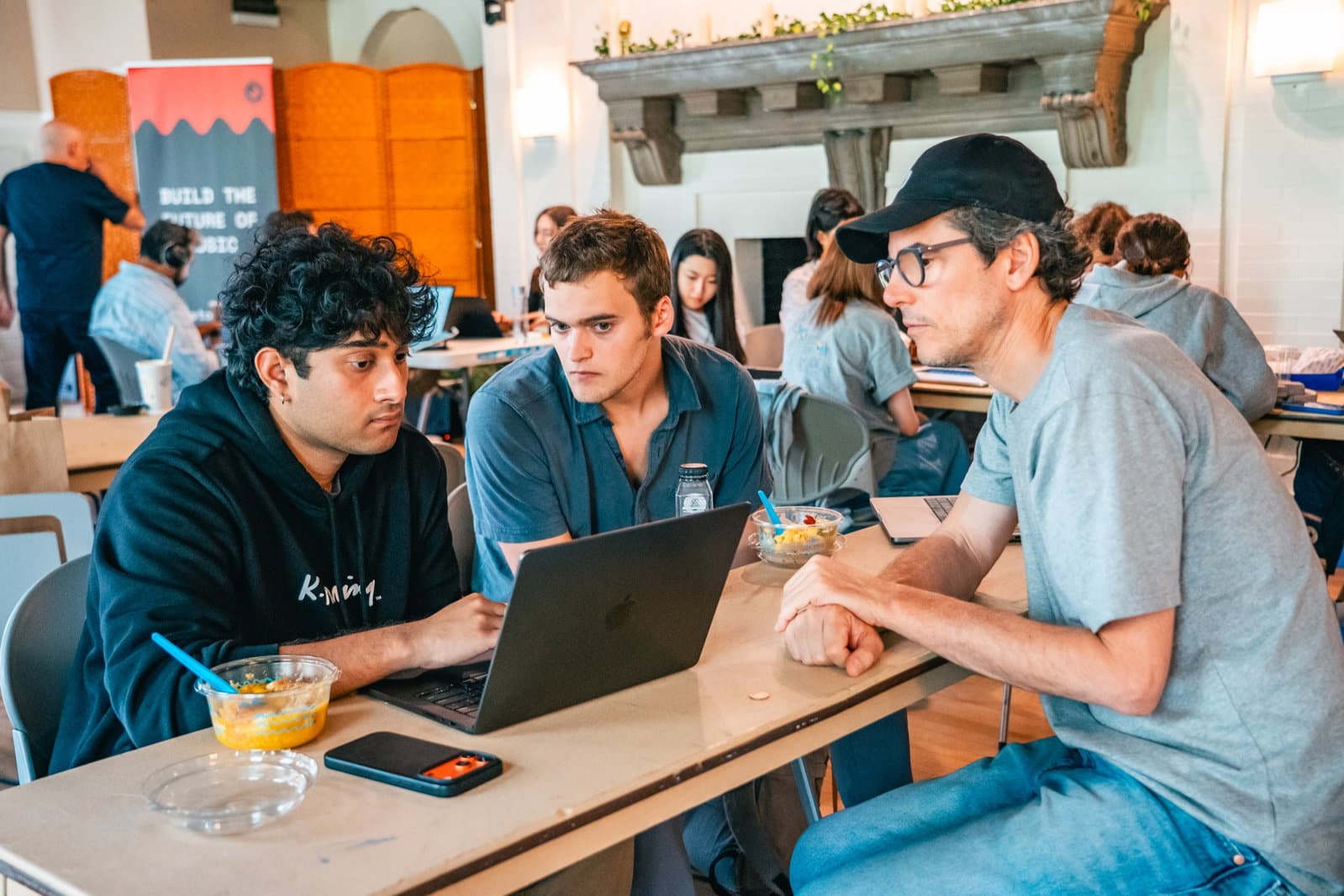
On our jurors and deliberation
For each hackathon, we select a variety of jurors from different music disciplines. There is usually a guest artist, a veteran performer or music producer (for example Richie Hawtin), who can approach judging from a real-world, creative angle.
Music industry leaders, both our supporting sponsors and other invitees, provide unique perspectives regarding technical originality, commercial viability and the industry-landscape. And of course, our founder JB Thiebaut is usually on the jury, providing his perspective as a hackathon veteran who has seen over a decade of great (and less-great) projects.
Each juror will have a slightly different take on the above criteria. And after all the hacks are scored, the judges go away into a room and debate the winners. The scores act as a solid guide, but only through discussion and the exchange of ideas and relative expertise are the final decisions made.
What this all means if you're competing
Pour your energy into the idea. Build something that matters to music makers. Make it something no one's seen. Give artists a new way to create. Do that, and you're already most of the way to the podium.
Think you've got what it takes to win?
See our upcoming Music Technology Hackathons and put your idea in front of the jury.