Music Technology Hackathon: Build the Future of Creative Tools
Date: 6–7 June 2026
Location: David Friend Recital Hall, Berklee College of Music — 921 Boylston Street, Boston, MA 02115
Context: Immediately following the Berklee AIMS conference
✅ This event has wrapped — thank you to everyone who took part!






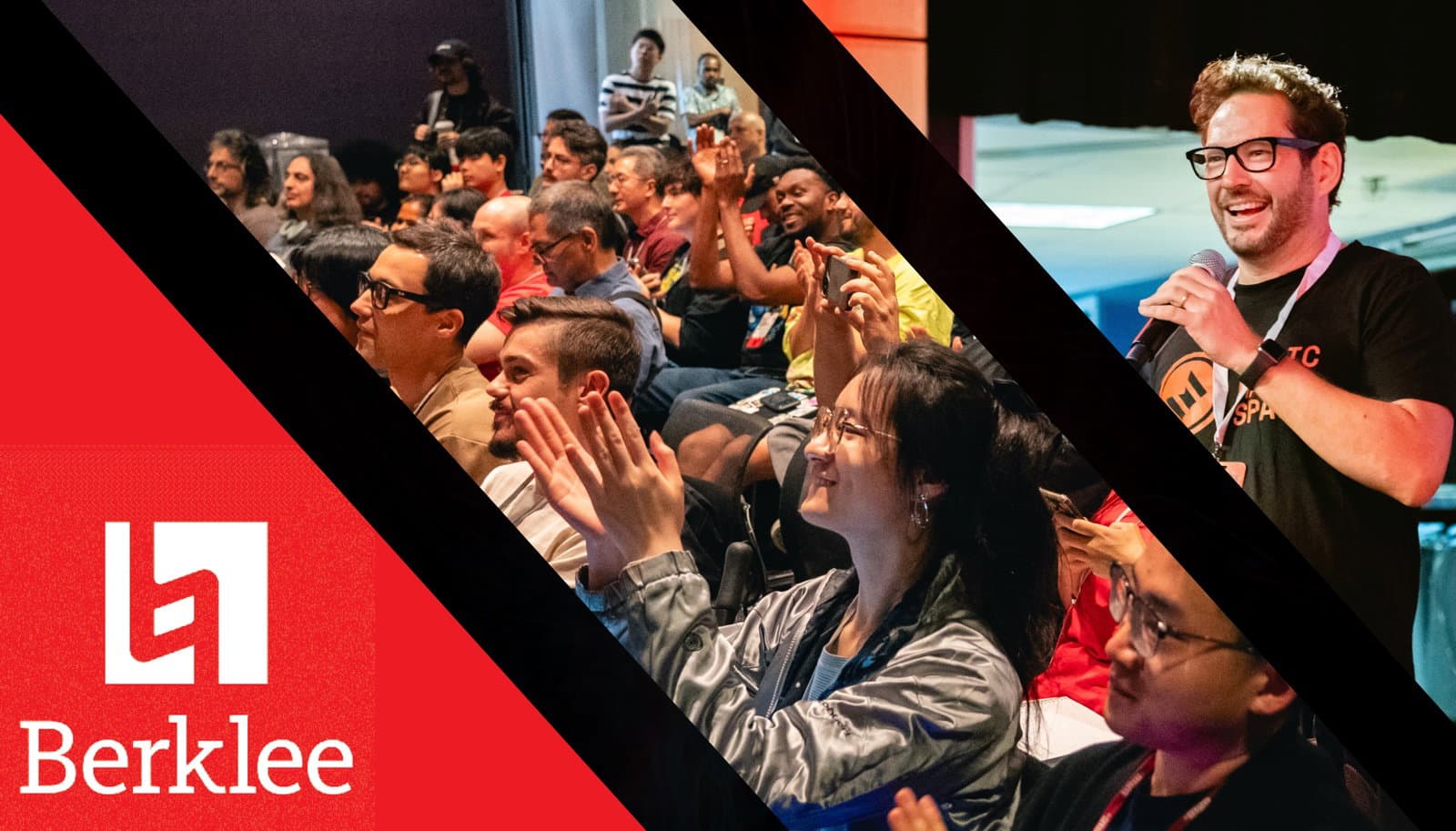
🏆 Winners
Congratulations to every team that built and presented at Boston 2026 — and to our winners, chosen by the jury. Top three in each challenge track below.
Google DeepMind
Premium Challenge Sponsor · $2,000 prize
- 🥇Space JAM — BunsBuggy
- 🥈Hit the changes — The Practice Lab
- 🥉C.O.S.M.I.C — DJ
Ableton
- 🥇untitled unmastered — untitled unmastered
- 🥈Lily — Lily Livecode Poetry
- 🥉Motif – Non-Western Music AI — Jad Al Masri's project
Suno
- 🥇C.O.S.M.I.C — DJ
- 🥈Shine Up Notes On — Suno & PartyKeys — bohan's project
- 🥉Between Sets — Between Sets
Stability AI
- 🥇Motif – Non-Western Music AI — Jad Al Masri's project
- 🥈SAO-Doh — hack-a-lil
- 🥉theDAW — GANTASMO
MuseHub
- 🥇Unrealtime — Team Beta
- 🥈Chop — Rohan Vijaykumar's project
- 🥉PocketBand — PocketBand
Audiotool
- 🥇Jamarama — jamarama
- 🥈untitled unmastered — untitled unmastered
- 🥉Space JAM — BunsBuggy
Open / no track
- 🥇Hit the changes — The Practice Lab
- 🥈RhythmHeads — Fangyi Gao's project
- 🥉MoodMirror — MoodMirror
⭐ Most Accessible Product
Cross-cutting prize · sponsored by the MIDI Association
Emotional Magenta — Robert Jaret's project
All Participants
To respect participants' privacy, the full participant directory is only visible to people who registered for this hackathon.
If you took part, you can browse everyone's profiles, search by skill, and message teammates from your hackathon dashboard.
View participants →Keep building with our sponsors
Two hands-on online workshops from our Boston challenge sponsors — open to everyone, wherever you are.
Google DeepMind · Workshop
Real-time music interaction with Magenta RT
With Jesse Engel (Google DeepMind, Magenta) · Wednesday 24 June 2026, online.
Join the workshop →Stability AI · Workshop
Generate music with Stable Audio 3.0
With CJ Carr (Stability AI / Dadabots) · Thursday 16 July 2026, online.
Join the workshop →Over 6–7 June 2026, more than a hundred developers, artists, researchers and product thinkers gathered in Boston for a 2-day, hands-on music technology hackathon, right after the Berklee AIMS conference. Here's what it was all about.
This event brings together developers, artists, researchers, product thinkers, and sound obsessives to prototype new tools for music creation, performance and listening. Whether you're a seasoned audio DSP engineer, a web developer, a performer, or a student just getting started in music tech, you're welcome. Participation is open to adults aged 18+ only.
Building on the conversations and research shared at AIMS, teams will have two intense days to turn ideas into working prototypes. Expect a mix of rapid ideation, mentoring, deep focus time, and informal sharing with peers.
You can arrive with a project idea or form a team on site. We'll help match participants into small groups (typically 3–4 people) so that each team has a blend of skills across coding, sound, design, and user experience.
In particular, we are inviting Berklee musicians and artists to play a leading role in teams: bringing artistic visions, defining musical use cases, and shaping what success looks like for each project. Teams will be formed around strong creative directions from Berklee students, alumni, and faculty, then paired with technologists who can help realise those ideas.
Throughout the weekend, mentors from Music Hackspace, Berklee, and industry partners will be available to support you on topics such as audio programming, generative AI, UX for creative tools, and taking research prototypes toward real-world products.
Join the Discord community
Chat with other Boston participants, find collaborators, ask questions, and get real-time updates from the team in the lead-up to the event. It's where most team formation actually happens.
discord.com/invite/wsWfFpt →
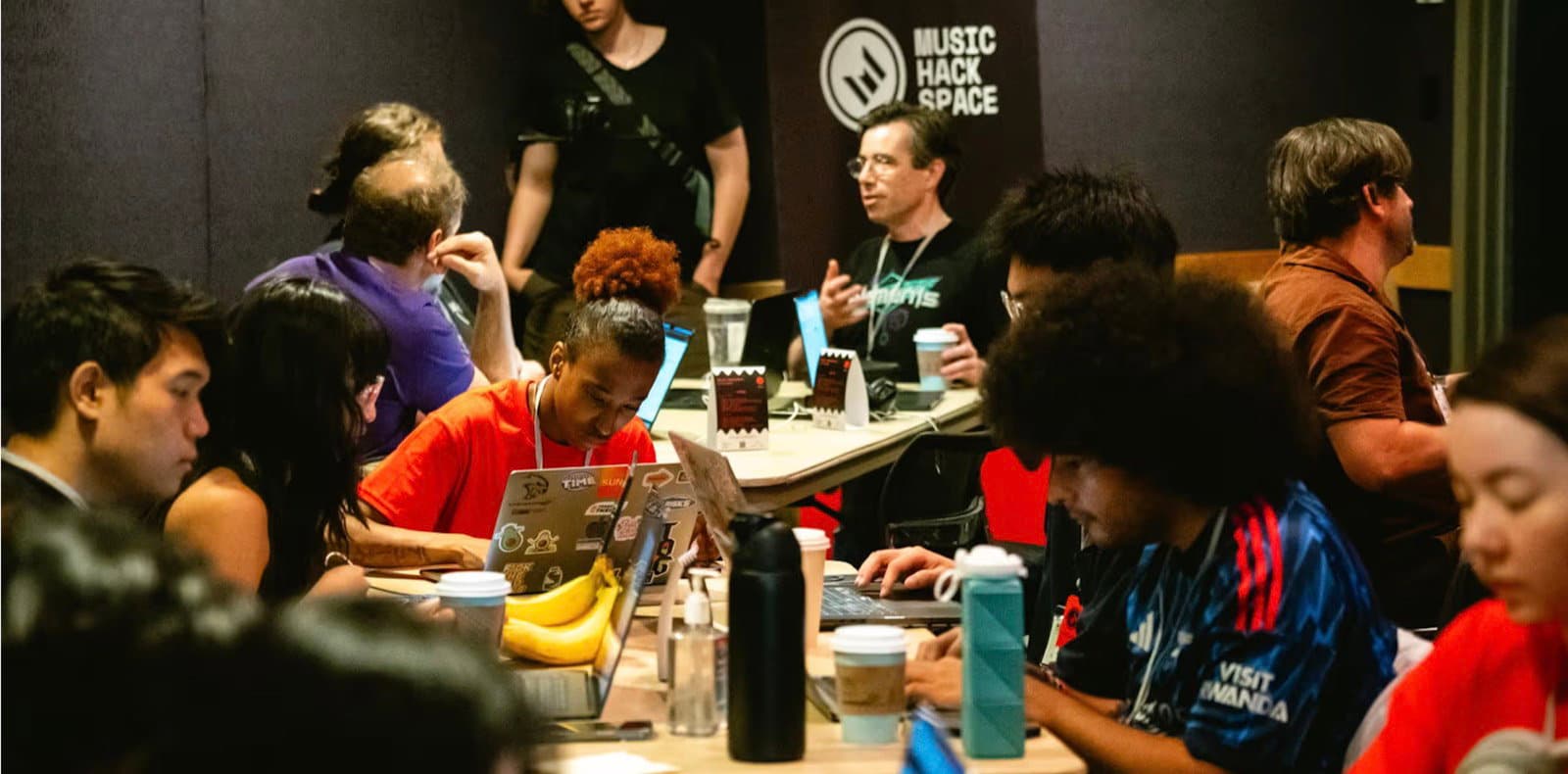
This Hackathon needs you
The hackathon is open to participants from AIMS and the wider Boston community. You don't need prior hackathon experience, only curiosity and a willingness to collaborate.
- Berklee students, alumni, and faculty who want to lead or shape projects as artists
- Producers, performers, and composers looking to prototype new tools and workflows
- Audio and music technologists
- Students and researchers in music, CS, and related fields
- Designers, product managers, and UX researchers
- Anyone excited about building tools for music
You don't need to code to be central to a team. We're explicitly looking for Berklee musicians and artists to act as creative leads, defining problems, curating sounds and workflows, and guiding the product vision.
We'll help you find a team that matches your interests and skills so you can focus on building something meaningful over the weekend.
Challenges
Google DeepMind Challenge
Build and play your own live AI instruments with Magenta RealTime 2
What teams can build
How to Get Started
Ableton Challenge
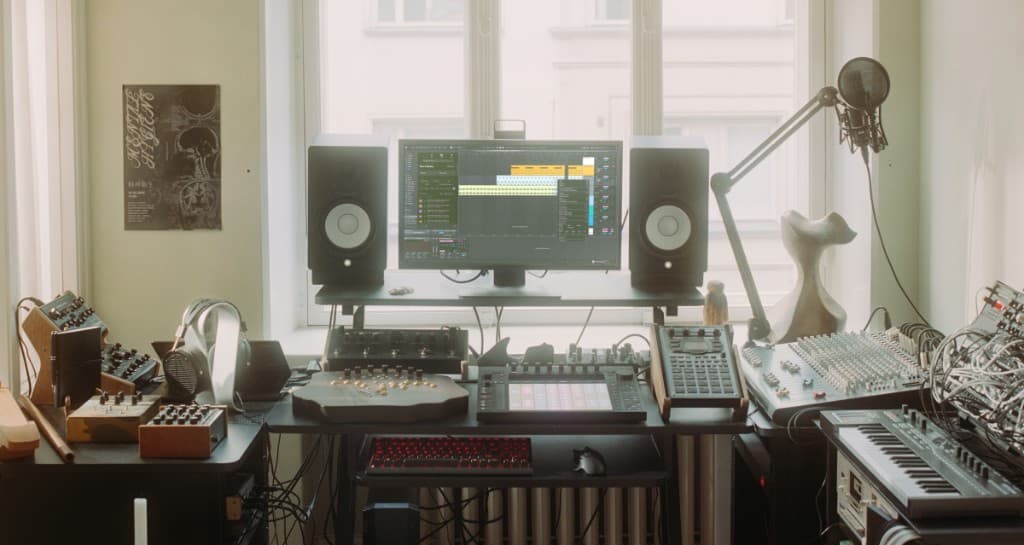
🎁 Every participant who takes on the Ableton challenge receives a Live 12 Suite NFR licence and is automatically added to Ableton's Live beta program.
Build a creative music product that could launch in Ableton Live
What teams can build
How to Get Started
MuseHub Challenge
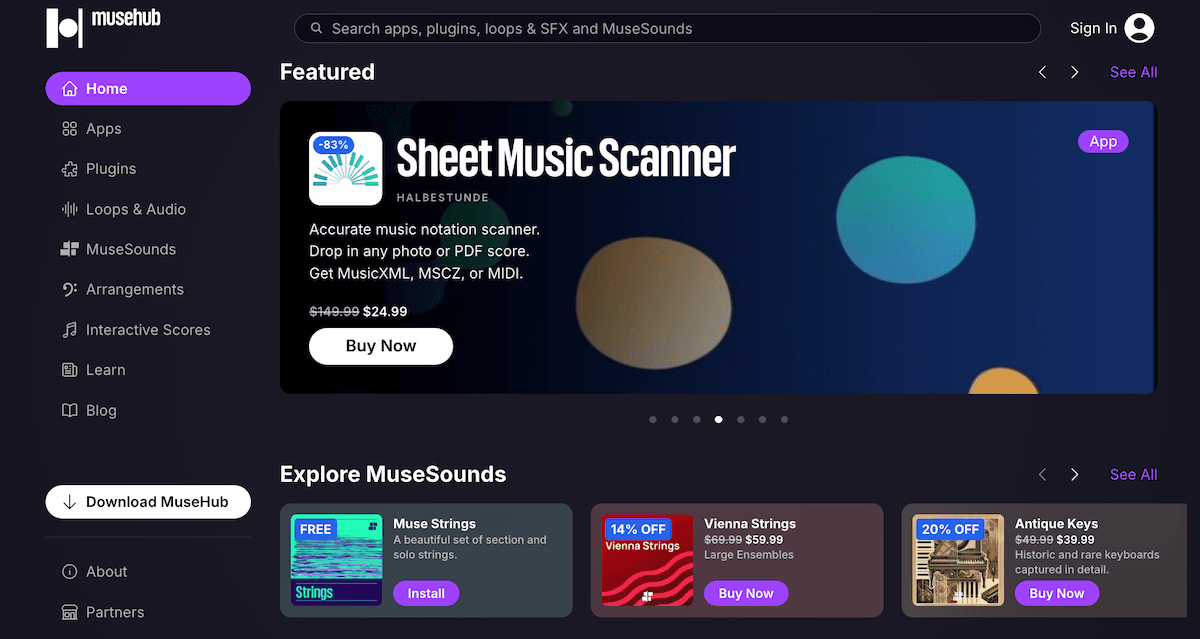
Build a creative music product that could launch on MuseHub
What teams can build
How to Get Started
Audiotool Challenge
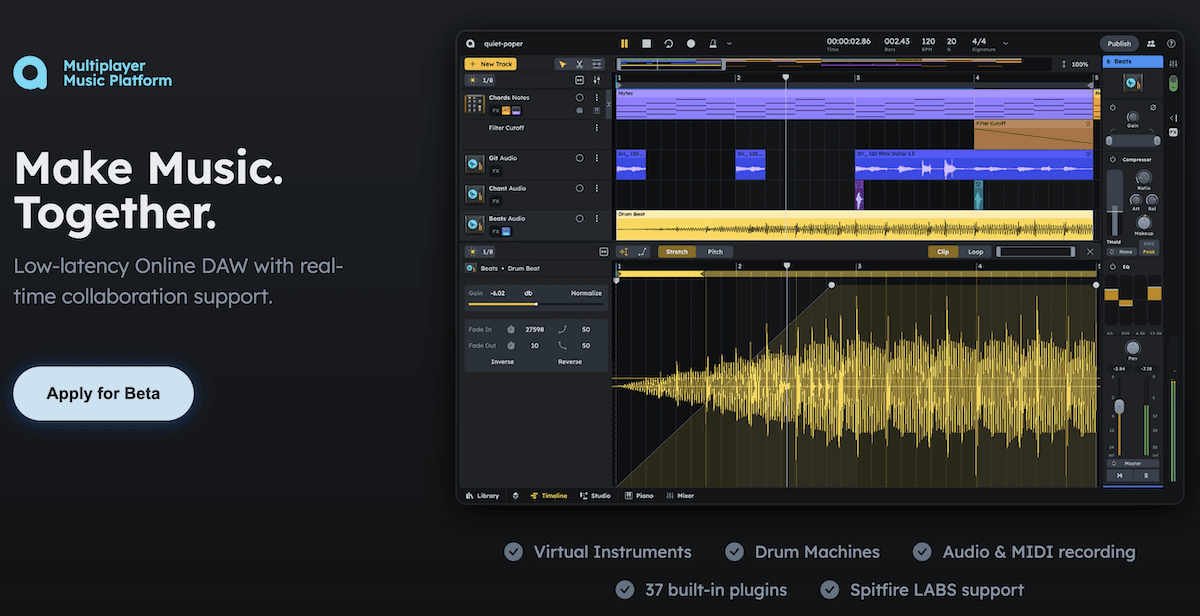
Build a creative music product that could launch on Audiotool
What teams can build
How to Get Started
Suno Challenge

Build new ways to play with music using Suno
What teams can build
How to Get Started
Stability AI Challenge
Build a community-facing project for musicians using Stable Audio 3
What teams can build
How to Get Started
Prizes & Opportunities
Recognition & Showcases
A jury including representatives from Berklee, Music Hackspace, and industry partners will select standout projects to highlight. Selected teams may be invited to share their work in follow-up showcases, talks, or blog features.
💰 $2,000 cash prize — Google DeepMind Challenge
The winning team of the Google DeepMind Challenge will share a $2,000 cash prize, awarded by our premium challenge sponsor, Google DeepMind.
Ableton Live Suite Licenses
Four Ableton Live Suite licenses will be awarded to the winning team of the Ableton challenge — one for each team member, theirs to keep.
💰 $2,000 cash prize — Suno Challenge
The winning team of the Suno challenge will share a $2,000 cash prize. Every participant on the winning team also receives a one-year Suno Premier subscription.
💰 Up to $2,000 cash prize — Stability AI Challenge
The winning team of the Stability AI Challenge — best community-facing project for musicians using Stable Audio 3 — receives $500 per team member (up to four participants, so up to $2,000 in total), awarded by Stability AI.
♿ Most Accessible Product — MIDI Association
A cross-cutting prize that runs on top of every challenge track: if accessibility was a meaningful design driver for your project, opt in at submission time. The winning team receives a MIDI Association membership and their own Sysex manufacturer ID — the same kind of identifier used by Ableton, Roland, Korg, etc. to address devices in MIDI messages. Sponsored by the MIDI Association.
Teams opt in via a checkbox on the submission wizard. You can still compete in any challenge track — this prize is additional.
Pathways Beyond the Weekend
The goal is not just a weekend demo, but to help promising ideas move toward real-world impact—whether as research tools, open-source projects, or commercial products. We'll share opportunities for continuing your work with the broader Music Hackspace and Berklee communities.
Mentoring
Winning teams can receive two mentoring sessions with one of our mentors, to help refine your project and next steps after the hackathon.
Jury
We're excited to welcome Ilaria Manco, Jonathan Rochelle, Jonathan Wyner, Lillia Betz, Michele Darling, Christian Steinmetz, Andreas Jacobi, and JB Thiebaut to the jury panel, where they'll evaluate projects across creativity, technical execution, and real-world product potential.
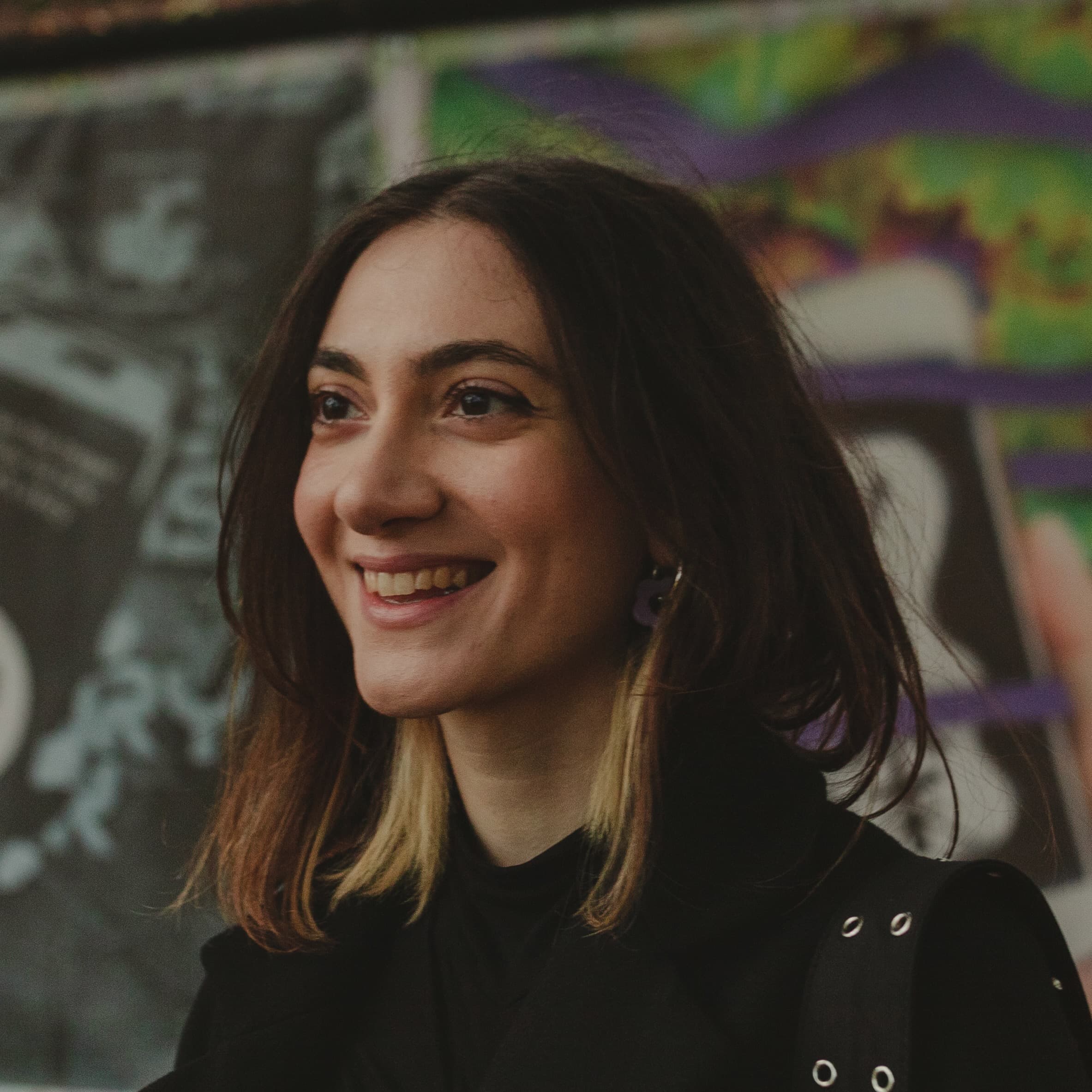
Ilaria Manco is a Research Scientist in the Magenta team at Google DeepMind. Her research spans generative models and representation learning in the music domain, with a current focus on new forms of musical interaction through controllable, real-time generative models. Ilaria received her PhD from Queen Mary University of London, where she developed audio-language modeling approaches for music understanding, and holds an MSci in physics from Imperial College London. Beyond her research, she is actively involved in the electronic music scene as a DJ, grassroots organizer, and radio host.
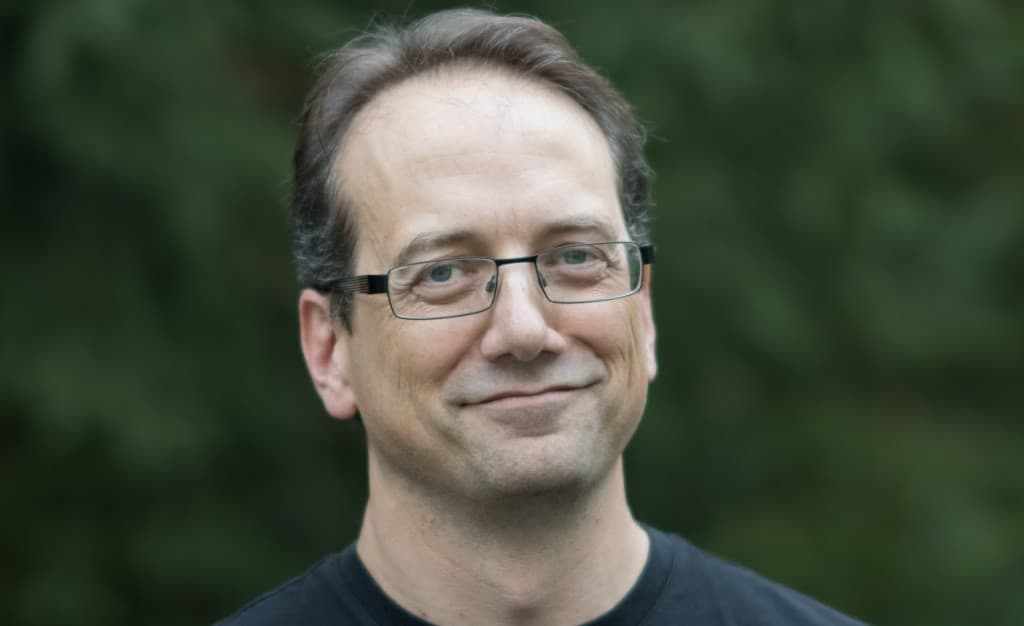
Jonathan Rochelle is a product leader and entrepreneur currently building AI-powered music technology at Lutely. He previously led product teams at LinkedIn and Zapier, and earlier at Google he helped shape products including Sheets, Docs, Drive, Forms, Classroom, and Jamboard, bringing collaborative tools to hundreds of millions of people.
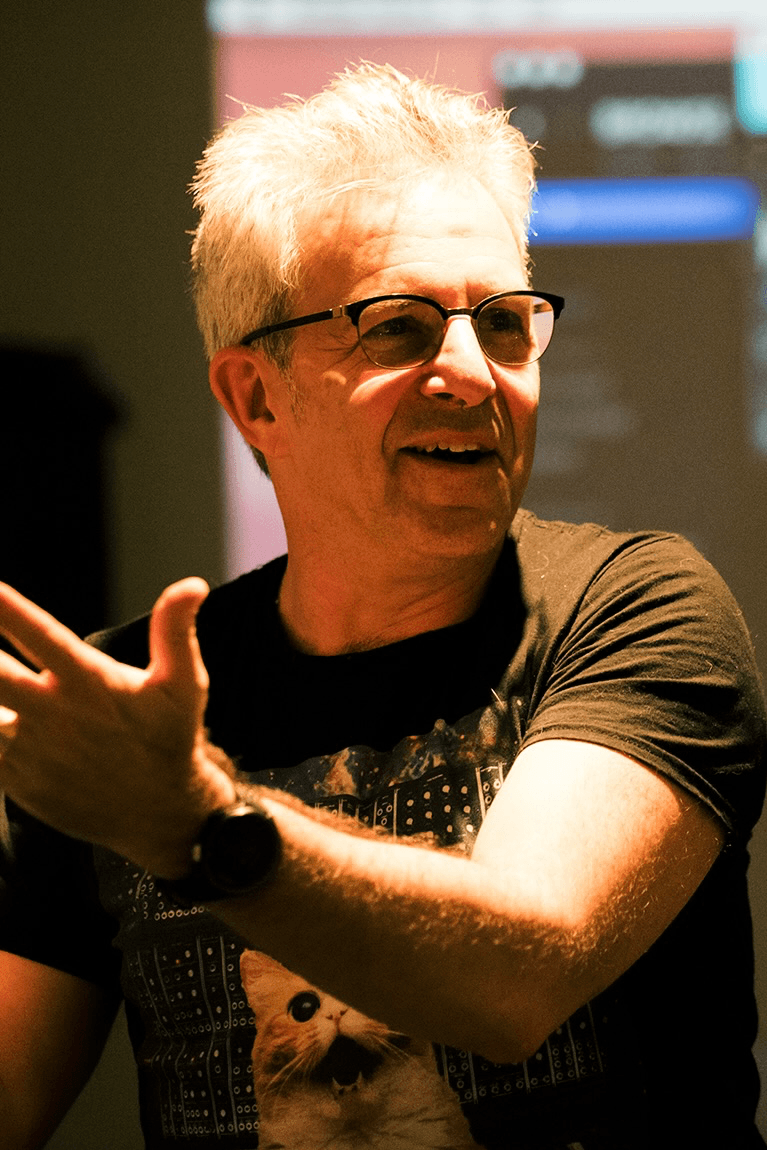
Jonathan Wyner is head of artistic technology initiatives for BEATL (Berklee Emerging Artistic Technology Lab), professor of music production and engineering at Berklee College of Music, and an instructor at Berklee Online. He is also the chief engineer at M Works Studios in Somerville, Massachusetts; past president of the Audio Engineering Society (AES); and former education director for iZotope. A musician, performer, producer, and engineer, he has mastered and produced more than 5,000 recordings over the last 40 years, with credits including James Taylor, David Bowie, Aerosmith, Kiri Te Kanawa, Aimee Mann, Miles Davis, Thelonious Monk, Pink Floyd, Josh Groban, Bruce Springsteen, and Nirvana. At BEATL, his work centers on helping artists, educators, and industry leaders engage with AI and other emerging technologies in ways that are grounded in real musical practice and attentive to questions of authorship, identity, and impact. As an advisor to music and technology companies — including iZotope, Suno, Softube, and Moises — he represents the perspective of working musicians and educators in the development of creative tools.
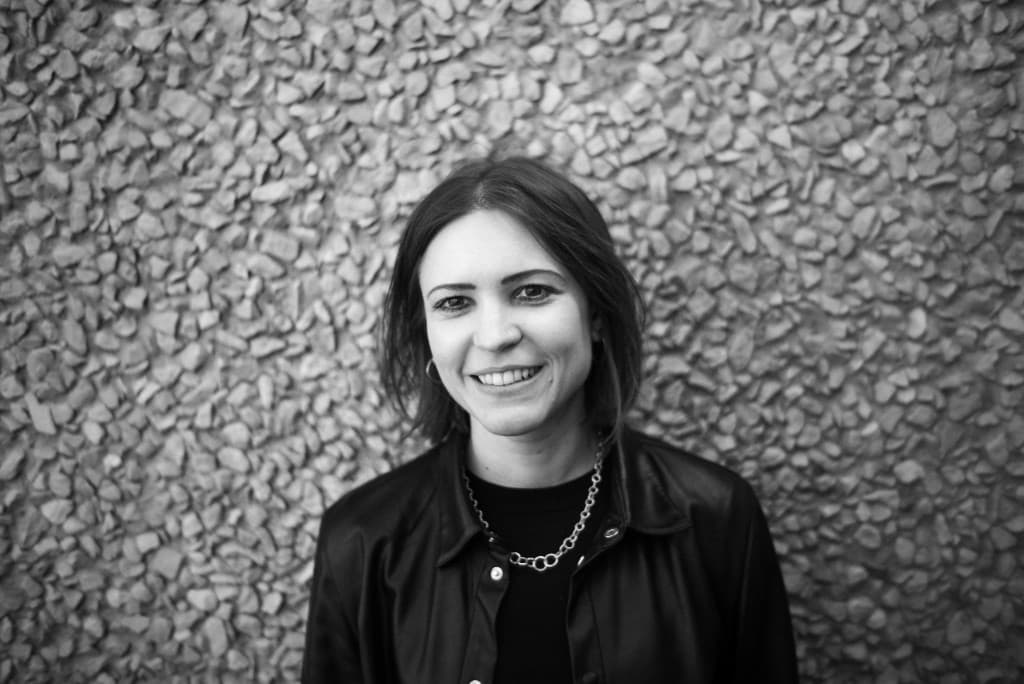
Lillia Betz
Lillia Betz is the Head of AI R&D at Ableton. Originally from France and with a background in classical music education, she earned a degree in Electronic Production and Design at Berklee College of Music. Having worked as a freelancer in Los Angeles, she joined Ableton ten years ago, where she became Head of Max for Live. In her current position, she continues to drive innovation, focusing on AI’s positive impact on artists and the creative process.

Michele Darling is the chair of the Electronic Production and Design Department at Berklee College of Music. An accomplished sound designer, composer, recording engineer, and educator, she brings a unique combination of professional experience and passion for electronic music and sound design to our jury panel. Darling worked for many years as part of an Emmy Award–winning production team at Sesame Workshop, composing music and creating sound design for Muppets characters. Her career includes sound work for animated television shows such as Pokémon and Yu-Gi-Oh!. She is also a founding member of Aerostatic, composing audio environments for films, installations, and music performances featured in galleries and festivals worldwide.
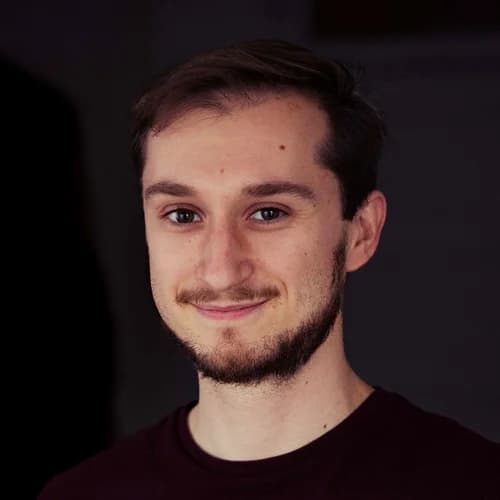
Christian Steinmetz
Christian Steinmetz is a Research Scientist at Suno, where he works on foundational research for large-scale music generation models. He earned his PhD from Queen Mary University of London and has a background in machine learning, audio signal processing, and audio engineering, with a focus on high-quality music and audio production. Previously, he conducted research at Meta, Adobe, Dolby, and Bose. His work centers on building audio technologies that connect research with practical creative tools for musicians and audio creators.
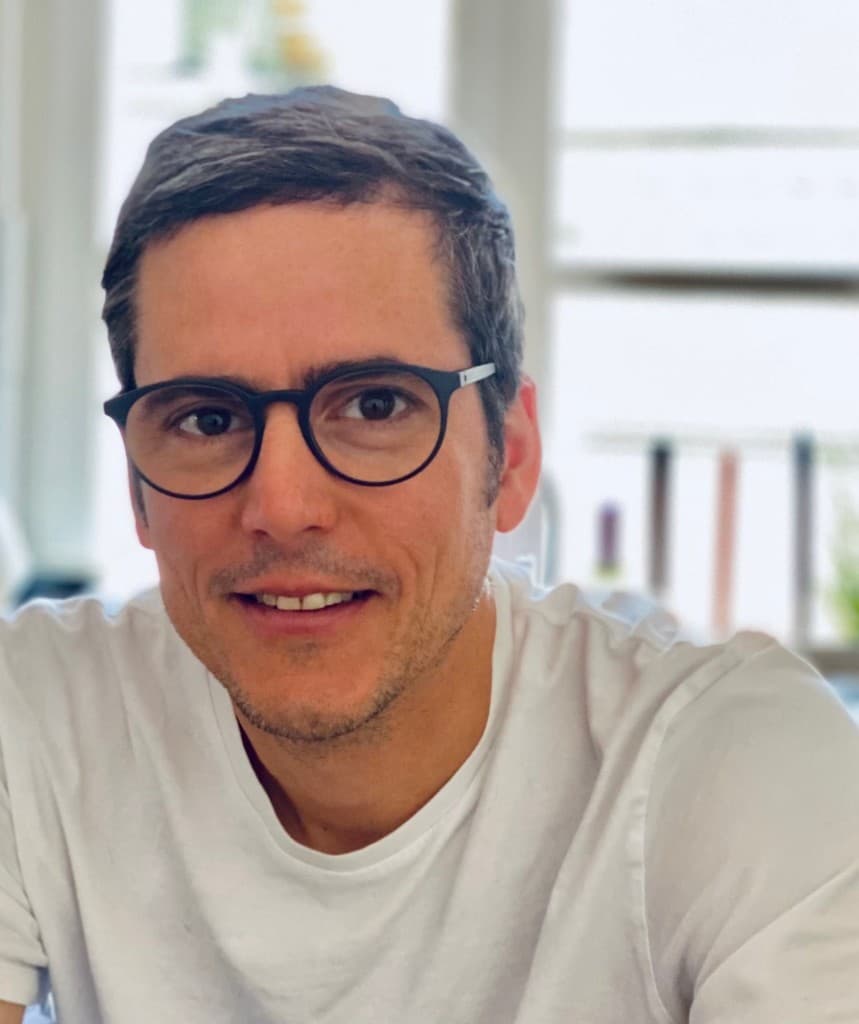
Andreas Jacobi is Co-Founder and CEO of Audiotool, a browser-based music production platform (DAW) with a strong focus on collaboration. Andreas is a serial entrepreneur with deep roots in creative technology. He has co-founded and led multiple companies across Germany and the US — including Make.TV, a cloud-based live video SaaS platform acquired by LTN Global in 2019, where he subsequently served as General Manager. Earlier ventures include dimensional GmbH (acquired by Qvest Media) and HOBNOX, a platform for audio and video creatives that became the direct predecessor to Audiotool. Andreas holds patents in cloud-based video production.
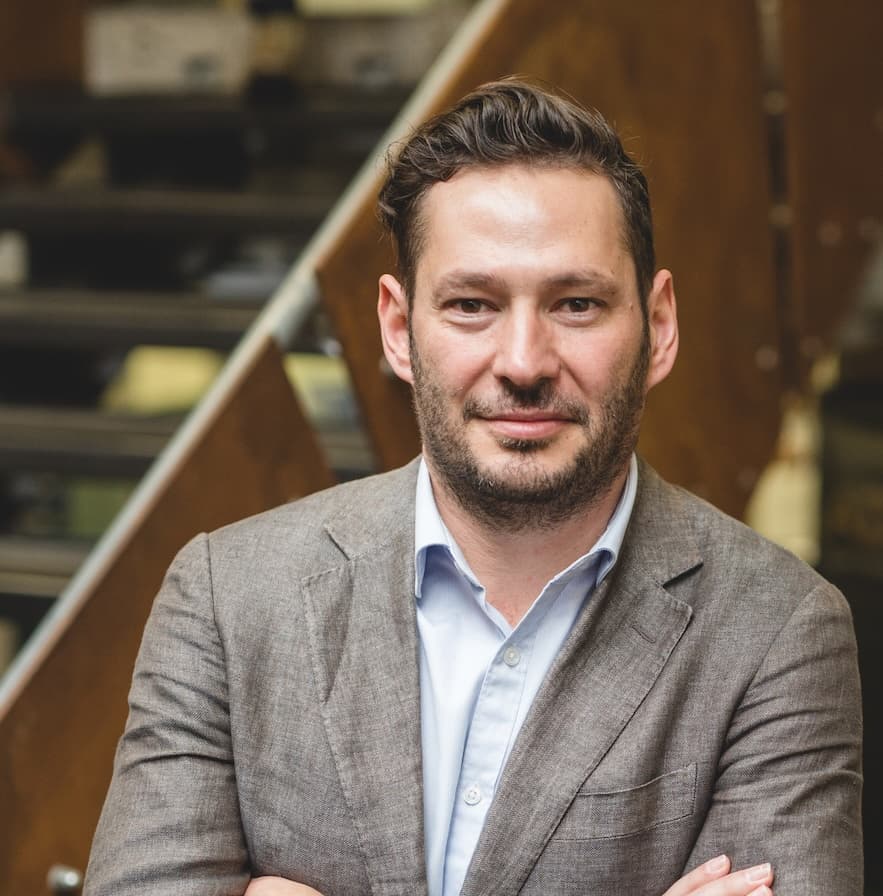
Jean-Baptiste "JB" Thiebaut is CEO of Music Hackspace and Chordline Ventures. He holds a PhD in computer music from Queen Mary University of London and built a career bridging R&D, product, and community in music technology. He has led programmes and teams focused on creative coding and music technology education, supporting thousands of artists and developers to ship new tools, prototypes, and products. His work sits at the intersection of research, hands-on making, and ecosystem building across the global music tech community.
Mentors
Our mentors will be on hand during the hackathon to help you with product direction, creative decisions, and turning ideas into compelling demos — and selected winners can book follow-up sessions with them after the event (see Prizes & Opportunities).
Jesse Engel
Lead Research Scientist · Google DeepMind Magenta
Ethan Manilow
Senior Research Scientist · Google DeepMind Magenta
Kehang Han
Research Engineer · Google DeepMind Magenta
Yotam Mann
Google DeepMind Magenta
David Braun
Google DeepMind Magenta
Hidde de Jong
Software Engineer · Ableton
Ben Casey
Brand Manager & Certified Trainer · Ableton
Lucas Cantor
Composer, Producer & General Partner, Mindset Music Tech
Jonathan Rochelle
Product leader · Lutely
Zach Evans
Head of Audio Research · Stability AI
Matthew Rice
Research Engineer · Stability AI
Zack Zukowski
Music Researcher, Stability AI · Dadabots
CJ Carr
Stability AI · Dadabots
Mirta Gilson
Co-Founder & Chief Operating Officer · Audiotool
Schedule
All times listed are in Eastern Time (ET), the local Boston timezone.
Catering: Coffee and tea are available throughout the day. Lunch and dinner are not provided — please make your own arrangements; there are plenty of options around Boylston Street. The venue closes at 11 PM on Saturday (no overnight access).
Day 0 — Friday 5 June
- 7:00 PM — Welcome party at Dillon's, 955 Boylston Street. Open to all registered participants — pick up your badge, meet other participants, and enjoy food and drinks.
Day 1 — Saturday 6 June
- 9:00 AM — Registration, coffee, and juices
- 10:00 AM — Welcome and framing from Music Hackspace and partners
- 10:30 AM — Sponsor presentations, API and challenge intros
- 11:30 AM — Team formation, with a special focus on concepts led by Berklee musicians and AIMS participants
- 12:00 PM — Hack begins
- 1:00–2:00 PM — Lunch break (on your own — plenty of options nearby)
- 2:00–6:00 PM — Mentor support and hacking
- 6:00 PM — Dinner break (on your own — plenty of options nearby), continued hacking
- 11:00 PM — Venue closes for the night — no overnight access
Day 2 — Sunday 7 June
- 9:00 AM — Coffee, juices, and final hacking sprint
- 12:00 PM — Mentor check-in and polish phase
- 3:00 PM — Documentation and presentation prep
- 4:00 PM — Team presentations
- 5:30 PM — Jury deliberation
- 6:00 PM — Winners announcement and closing
Room locations within the venue will be announced closer to the event and shared with all registered participants.
This event has finished
Registration is now closed — the Boston hackathon ran on 6–7 June 2026. Thank you to everyone who took part. Explore what the teams built, and see who else was there:
Co-Hosts

This event is organised by Music Hackspace in collaboration with Berklee, as a practical, hands-on complement to the AIMS conference.
Sponsors
Premium Challenge Sponsor
Gold Sponsors
Silver Sponsors
Special thanks to our sponsors for making this hackathon possible. See the Challenges section above for full details on each track.
Community Sponsors