Official ADE Lab Hackathon
Dates: 21–23 October 2026
Location: De Bakkerswinkel Westerpark, Regulateurshuis, Polonceaukade 1, 1014 DA Amsterdam
€50 ticket fee. Full refund if you cancel at least 7 days before the event.
Guest artist challenges
Colin Benders and Sam Feldt set the headline challenges for this edition.

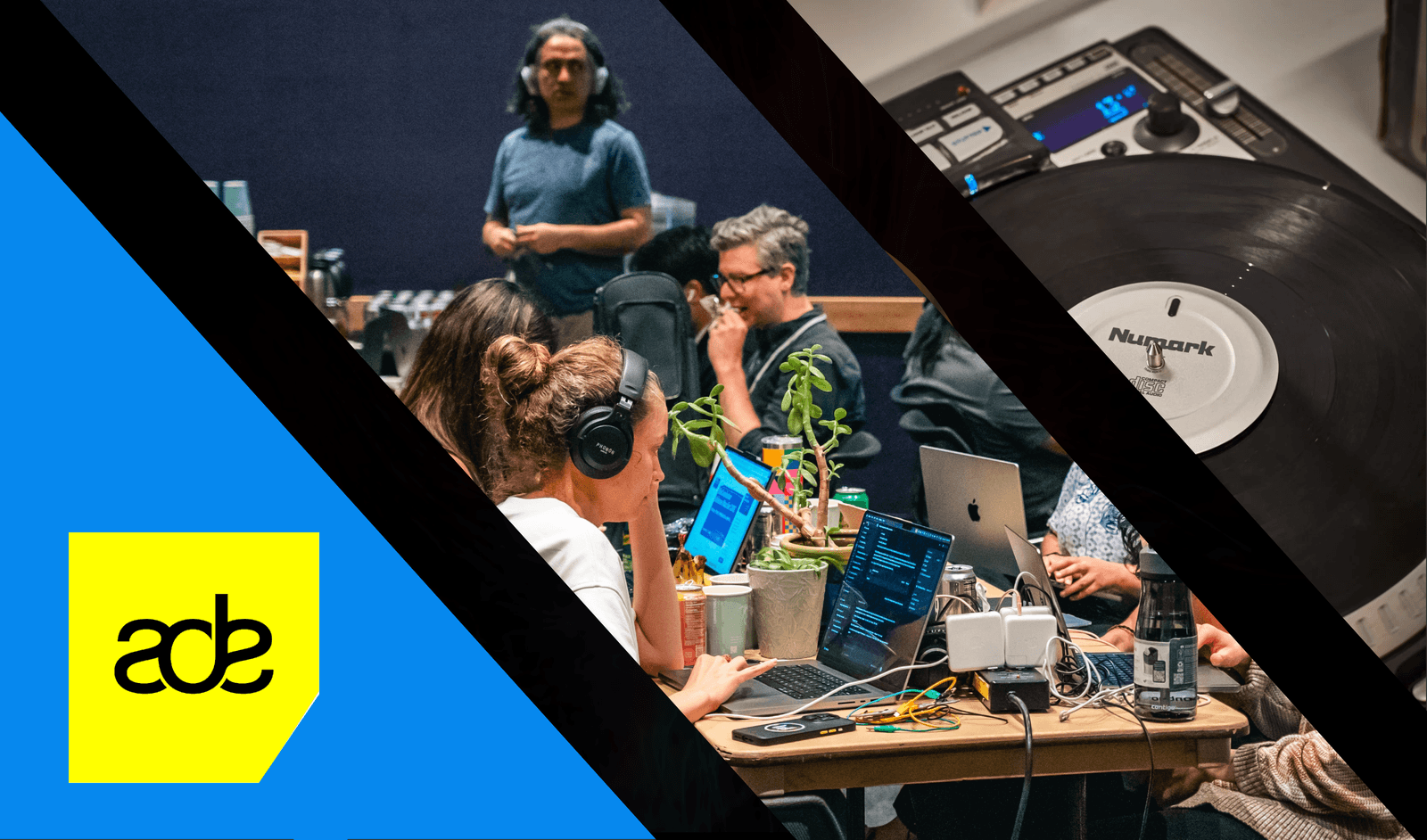
Music Hackspace is proud to host the official hackathon for ADE Lab 2026, the education and innovation programme running alongside the world-famous Amsterdam Dance Event.
Over two days, you'll join a creative community, take on a music industry challenge and turn your ideas into working prototypes for music creation, listening or performance. All the while, you'll enjoy the energy of ADE in the heart of the city.
The best projects will win fantastic prizes, including a presentation at the ADE Labs Showcase.
You can arrive with a project idea or form a team on site. We'll help match participants into small groups (typically 3–6 people) so teams have a blend of skills across coding, music, and product design.
Throughout the weekend, mentors from Music Hackspace and industry partners will be available to support you in developing your prototypes closer to real-world products.
ADE Lab is the place where the global dance and tech community comes together to shape the future of music. Join the movement at our hackathon.
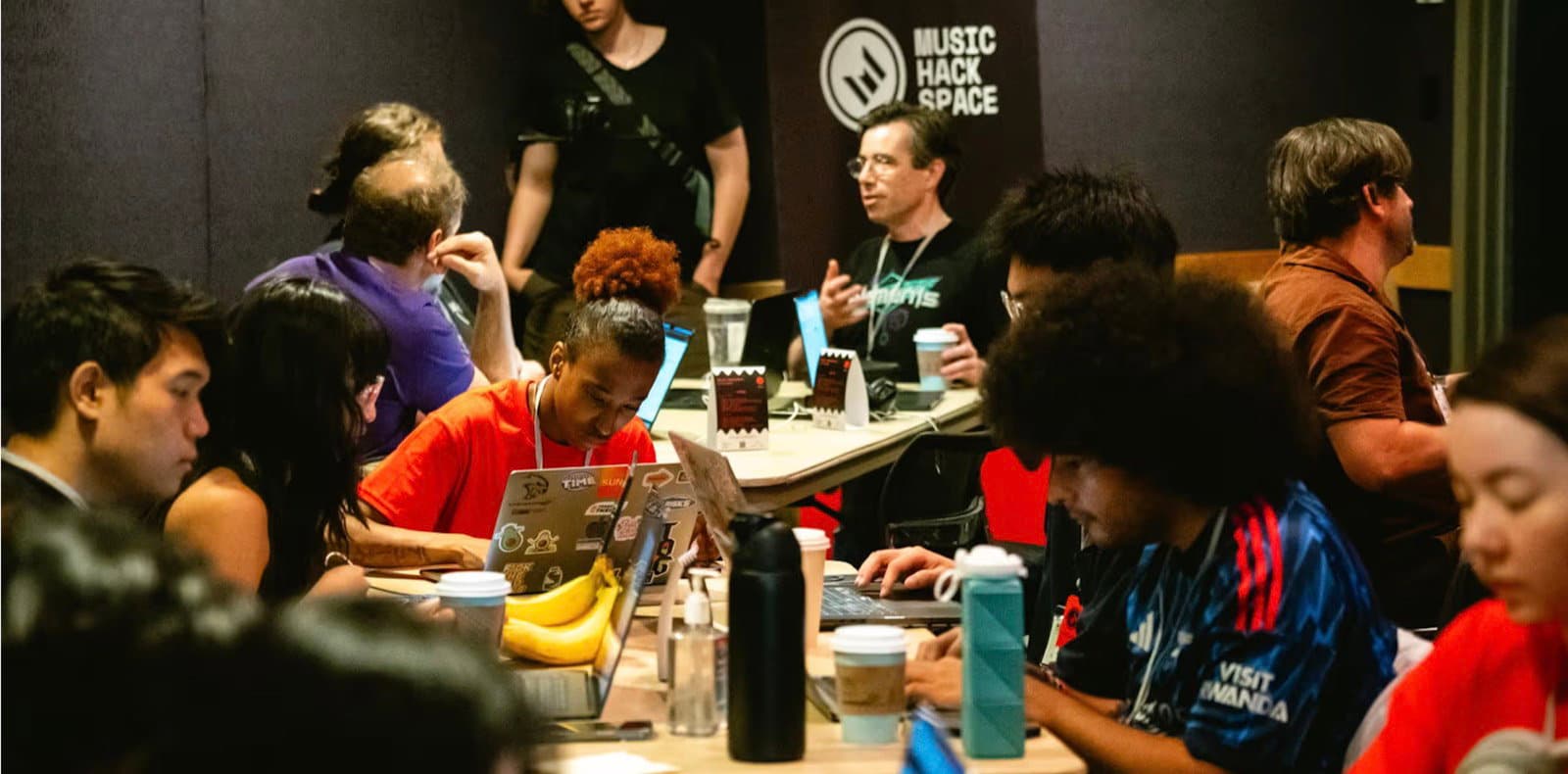
This Hackathon needs you
The hackathon is open to anyone in the European and international music and technology community. You don't need prior hackathon experience, only curiosity and a willingness to collaborate.
We welcome:
- Producers, performers, and composers looking to prototype new tools and workflows
- Electronic musicians, artists and DJs excited by the intersection of tech and culture
- Audio and music technologists and developers
- Students and researchers in music, CS, and related fields
- Designers, product managers, and UX researchers
- Anyone excited about building tools for music
You don't need to code to be central to a team. We're looking for musicians and artists to act as creative leads; defining problems, curating sounds and workflows, and guiding the product vision.
We'll help you find a team that matches your interests and skills so you can focus on building something meaningful over the weekend.
Participation is open to adults aged 18+ only.
Capacity is limited to 100 participants, around 30 teams, so don't miss out.
Highlights from our last event:
Preparation calls (open to everyone)
We're hosting four weekly online prep calls before the Amsterdam hackathon, every Wednesday from 23 September to 14 October, 5:00–6:00 PM CET (4:00 PM UK, 11:00 AM US Eastern).
Join a prep call to meet other participants, get clarity on the challenges and format, and start forming teams early so you can spend more time building during the event.
- Wednesday 23 September 2026 at 5:00 PM CETCreate account / login to register
- Wednesday 30 September 2026 at 5:00 PM CETCreate account / login to register
- Wednesday 7 October 2026 at 5:00 PM CET★ Jordi Pons (Stability AI) will present the Stability AI challengeCreate account / login to register
- Wednesday 14 October 2026 at 5:00 PM CETCreate account / login to register
By registering, you agree to our privacy policy.
Guest Artist Challenges
Two guest artists set the headline challenges for Amsterdam, and will present them to the teams on the morning of Wednesday 21 October. Teams can take one on, pick a sponsor challenge below, or bring their own idea.
Guest artist challenge
Colin Benders
Escape the Grid
Colin Benders is a Dutch musician known for building some of the largest modular synthesiser setups in the world, performing live on hardware and working increasingly away from the computer.
Almost every sequencer we use assumes the same thing: a fixed BPM and a grid of sixteenth notes. Colin’s challenge is to organise musical processes without depending on quantisation and step sequencing — physics-based, algorithmic or free-flowing approaches to time that still stay musically playable.
One hard constraint: whatever you build has to work in a live hardware performance setup. An experimental studio patch that only makes sense on a laptop screen does not meet the brief.
Some ideas and thought starters:
- Sequencing driven by physics, simulation or algorithmic processes rather than a step grid
- Time transfer functions — non-linear time, rhythmic fluctuation and drift that stays coherent
- New ways of generating and reshaping loops on non-grid-based structures
- Controllers and interfaces that make any of the above playable on stage, not just patchable
Guest artist challenge
Sam Feldt
The AI co-pilot for running a label
Sam Feldt is a Dutch DJ, producer and entrepreneur who runs his own label and has built his own internal tooling to manage it — including a system for artist contracts, payouts and compliance, and a royalty auditor that aggregates streaming data to find catalogue discrepancies.
Running a label means juggling a dozen tools that don’t talk to each other: contracts, royalties, payouts, catalogue admin. Sam’s challenge is to build the AI co-pilot that runs it — starting from a concrete contract-and-royalty problem, and stretching towards the wider idea of an AI co-CEO for a music business.
Sam is publishing a public repo and a written brief with a mock dataset (fake releases and contracts with deliberately planted errors) for teams to build against.
Some ideas and thought starters:
- A contract desk: ingest label contracts, surface the terms that matter, flag what does not add up
- Royalty auditing across streaming data — reconciling catalogue discrepancies nobody has time to chase
- Payout and compliance workflows that an artist or a small label can actually operate
- The wider co-CEO framing: one dashboard across label operations instead of a dozen disconnected tools
The full brief, public repo and mock dataset for this challenge are being finalised with Sam and will be published here before the event.
More about Sam Feldt →Sponsor Challenges
Platinum sponsor challenge
Stability AI
Build a community-facing project for musicians using Stable Audio 3
Stable Audio 3 is a new family of models that generate full songs, solo instruments, and sound effects, allowing for fast inference on consumer hardware and personal customisation.
Your challenge is to create a publicly available and accessible tool for music producers using the power of the Stable Audio 3 models, encouraging open development and showing the strengths of local open models and APIs.
What teams can build:
The quick inference speed and variety of output allows for many potential use cases, such as:
- An interactive drum machine / sampler with generated samples
- Integration with existing tools and workflows (e.g. Max for Live, VSTs)
- A personal streaming radio station
- A personal LoRA trainer to fit the model to your own sample library
How to get started
Teams can use the open-weights models, or Stable Audio 3.0 Large via the API. API keys are provided at the event.
Further sponsor challenges will be announced closer to the event.
Prizes & Opportunities
More prizes to be announced very soon.
ADE Lab Showcase
The winning team will be invited to present their work as part of the official ADE Lab programme on Friday 23 October — sharing their creation with an international audience of artists, technologists, and music industry professionals during one of the world's leading electronic music and digital creativity events.
Recognition & Opportunities
A jury of music technology practitioners and industry experts will select standout projects to highlight. Selected teams may be invited to share their work in follow-up showcases, talks, or features across ADE and Music Hackspace channels.
Pathways Beyond the Weekend
The goal is not just a weekend demo, but to help promising ideas move toward real-world impact — whether as research tools, open-source projects, or commercial products. We'll share opportunities for continuing your work with the broader Music Hackspace and ADE Lab community.
Mentoring
Teams can receive mentoring support throughout the weekend and beyond to help refine their project and plan next steps after the hackathon.
Jury
We're excited to welcome Colin Benders, Sam Feldt, JB Thiebaut, Jesper Skibsby and Jordi Pons to the jury panel, where they'll evaluate projects across creativity, technical execution, and real-world product potential. More jurors to follow.
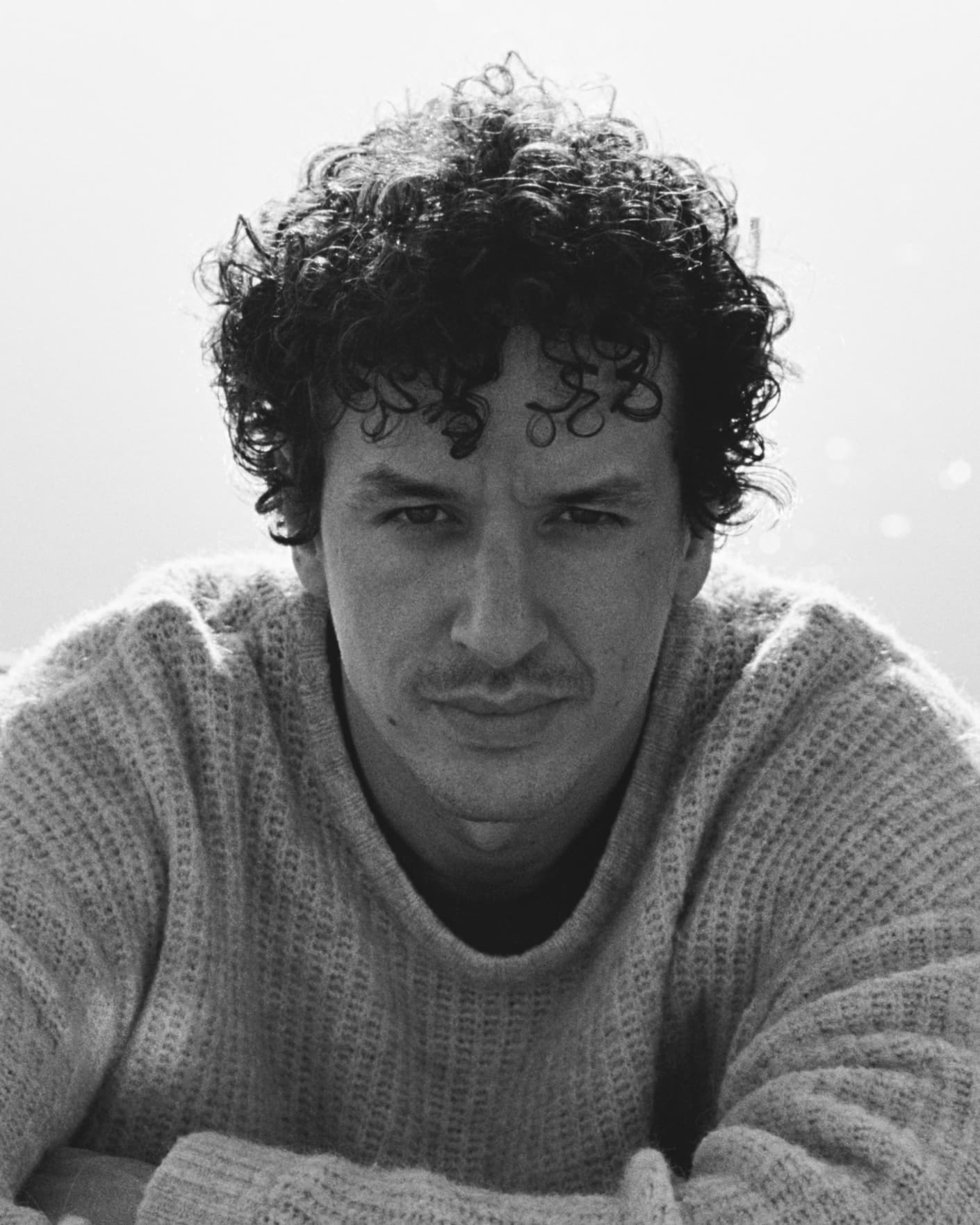
Photo: Lin Bartraij
Colin Benders
Guest artist & juror — Escape the Grid
Colin Benders is a Dutch musician who came up as a trumpeter and bandleader — as Kyteman, and with the Kyteman Orchestra — before turning to modular synthesis and building one of the largest Eurorack systems in the world, running to several hundred modules.
He performs live on hardware, patching in real time rather than arranging on a screen, and has streamed his patching sessions publicly for years, inviting the audience into the process as it happens.
He sets the Escape the Grid challenge (see Challenges & Prizes) and presents it to the teams on the morning of Wednesday 21 October.

Sam Feldt
Guest artist & juror — the AI co-pilot for running a label
Sam Feldt is a Dutch DJ, producer and entrepreneur. His 2015 remix of “Show Me Love” broke him internationally, and his catalogue has since passed six billion streams.
Alongside the music he runs Heartfeldt — a label ecosystem spanning records, publishing, radio and events — and the UN-backed Heartfeldt Foundation, which directs a share of his streaming revenue to environmental projects.
Running that business first-hand is where his challenge comes from: he has built his own internal tooling for contracts, payouts and royalty auditing, and asks teams to build the AI co-pilot that runs a label.
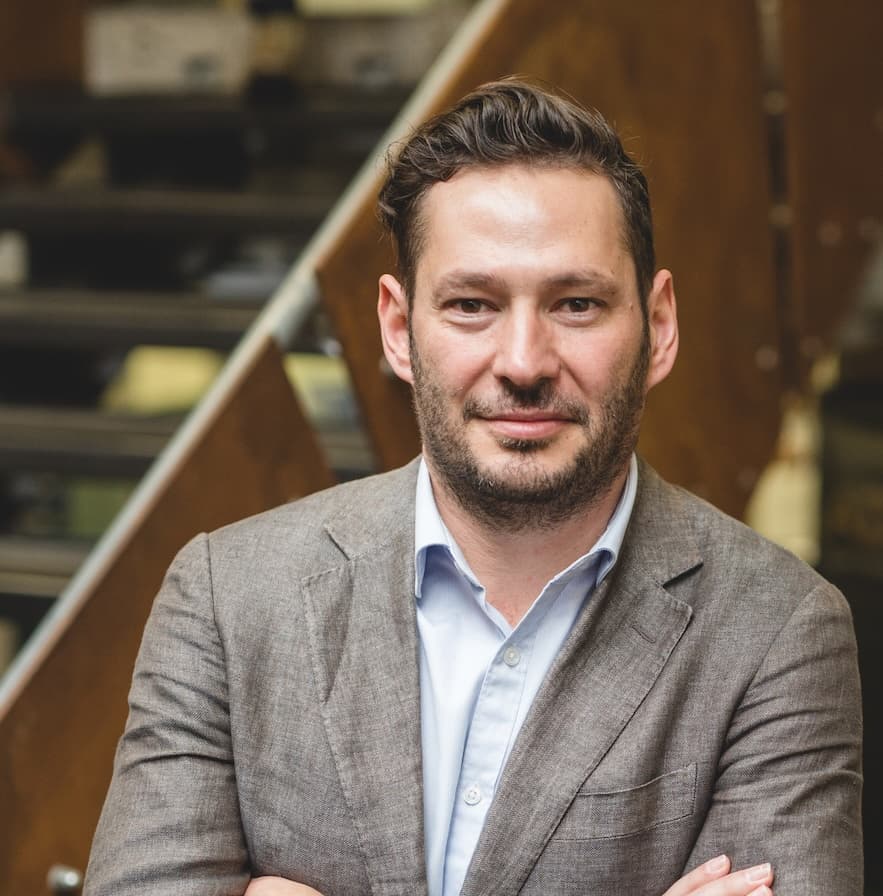
JB Thiebaut
Jean-Baptiste “JB” Thiebaut is CEO of Music Hackspace and Chordline Ventures. He holds a PhD in computer music from Queen Mary University of London and built a career bridging R&D, product, and community in music technology.
He has led programmes and teams focused on creative coding and music technology education, supporting thousands of artists and developers to ship new tools, prototypes, and products. His work sits at the intersection of research, hands-on making, and ecosystem building across the global music tech community.
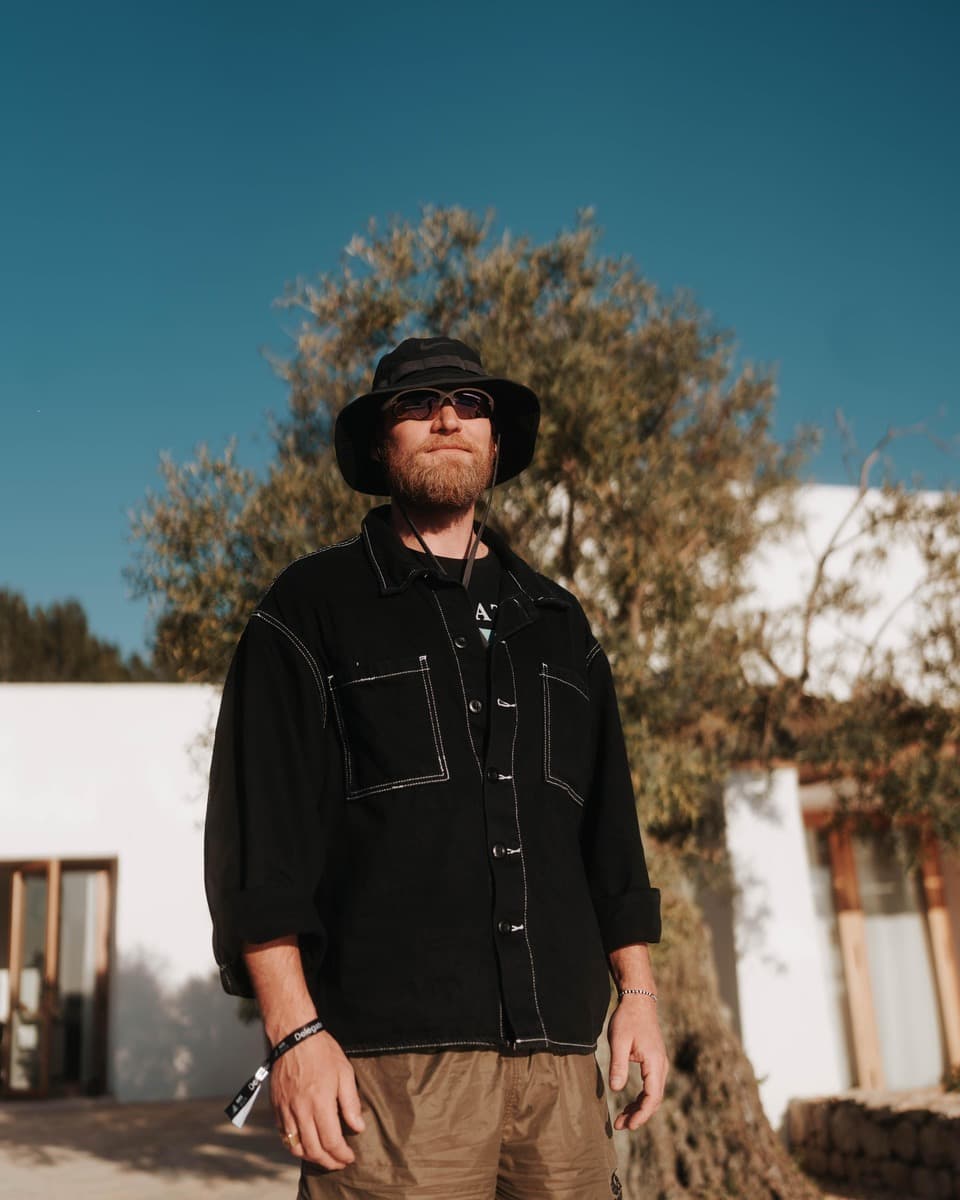
Jesper Skibsby
Jesper Skibsby is a music tech entrepreneur and the Founder and CEO of WARM, a global radio airplay analytics platform headquartered in Copenhagen. Since founding the company in 2017, Jesper has built WARM into a leading data infrastructure provider for the global music industry, tracking airplay across more than 21,000 stations in 150 countries, with strong reach into the dance music sector.
He is also Co-founder and head of vision of Lisbon Dance Summit (LDS), an international electronic music conference and city-wide festival held in Lisbon, connecting artists, labels, and industry professionals within the global dance music scene.
A hands-on tech builder and strategic advisor across music and tech, Jesper brings an entrepreneur’s eye for product and data to the live music and radio space. A frequent speaker at international conferences, he combines an operator’s perspective with a genuine passion for dance music.
Jesper leads operations across multiple entities spanning Denmark and Portugal, and is based in Lisbon.
Jordi Pons
Juror & mentor — Stability AI
Jordi Pons is a researcher at Stability AI working on generative models for audio and music. Previously he was a staff researcher at Dolby Laboratories.
He received a PhD in music technology, large-scale audio collections, and deep learning at the Music Technology Group (Universitat Pompeu Fabra, Barcelona), following an MSc in sound and music computing at the same institution and a BSc in telecommunications engineering at Universitat Politècnica de Catalunya (Barcelona).
He has also interned at IRCAM (Paris), the German Hearing Center (Hannover), Pandora Radio (Bay Area, USA), and Telefónica Research (Barcelona).
Mentors
Mentors are on hand through the weekend to help teams sharpen their idea, get unstuck, and plan what happens after the hackathon. Jordi Pons (see Jury above) also mentors on the Stability AI track. More mentors to follow.
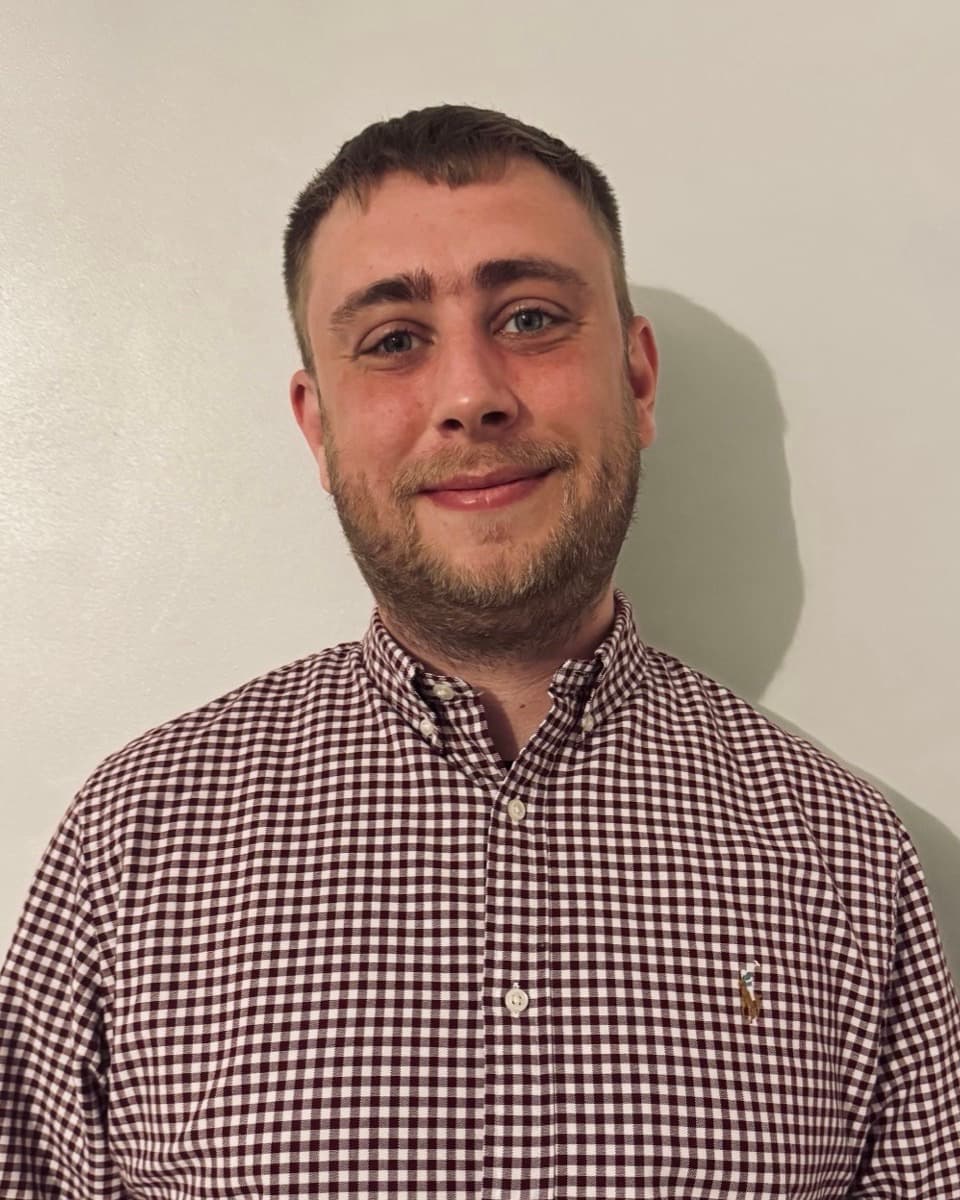
Josiah Taylor
Mentor — Stability AI
Josiah Taylor is an Audio Model QA on the research team at Stability AI, and has spent the last four years evaluating generative models for audio and music.
Josiah holds a master’s degree in music production from Staffordshire University.
Schedule at a Glance
Tuesday 20 October — Welcome Party (optional)
- Evening welcome party — venue and time to be confirmed
Day 1 – Wednesday 21 October
- ~10:00 — Welcome, introductions and overview of the hackathon
- Team formation and idea pitches
- Hacking sessions with mentor support
- Evening check-in and informal demos
Day 2 – Thursday 22 October
- Final hacking sprint and polishing
- ~16:00 — Team presentations to the jury
- Feedback and results
Friday 23 October — ADE Lab Session
- Curated session with the jury and winning teams as part of ADE Lab
The hackathon takes place at De Bakkerswinkel Westerpark, Regulateurshuis, Polonceaukade 1, 1014 DA Amsterdam. Exact times will be announced closer to the event and shared with all registered participants. All times will be in Central European Time (CET).
Code of Conduct
We are committed to a welcoming, inclusive, and harassment-free environment for everyone taking part in the hackathon.
Please read and follow our Hackathon Code of Conduct.
Intellectual Property (IP)
Who owns what you build
We want teams to build boldly, and we want this to be clear from day one:
- Your team keeps 100% ownership of what you create during the hackathon.
- Music Hackspace, ADE, and sponsors do not take ownership of your project IP.
- You're free to continue developing your project after the event (open-source it, commercialise it, publish it, etc.).
Using sponsor APIs, SDKs, or tools
Many teams will use sponsor-provided APIs or developer platforms. That's welcome — just keep in mind:
- You still own your project code, design, content, and ideas.
- Your use of a sponsor's API or SDK is subject to that sponsor's licence and terms of use.
- If you want to ship your project beyond the hackathon, check the relevant sponsor terms first.
Team contributions
- By joining a team, participants agree that team members can use and present the shared hackathon project or demo.
- If your team plans to continue after the event, we strongly recommend agreeing in writing on ownership splits, licensing, and future use.
Organiser

Partners
The Official ADE Lab Hackathon is an official element of the ADE Lab programme at Amsterdam Dance Event — the world's leading electronic music conference and festival. Music Hackspace owns and runs the hackathon; ADE embraces and programmes it as part of the ADE Lab.
Sponsors
Platinum Sponsor
Special thanks to our sponsors for making this hackathon possible. Further sponsors and their challenge tracks will be announced closer to the event.
See a Previous Edition
Recap from a previous Music Hackspace hackathon edition.