Creative Coding
Getting Started with Spectral Effects in Max
Work with FFT and spectral processing in Max using pfft~, building spectral filters, noise reduction, cross synthesis, buffer-based analysis and stochastic freeze and scrub effects.
Course overview
In this workshop, you dive into the powerful world of spectral processing using Max and FFT (Fast Fourier Transform) techniques. You explore both the theory and practical applications of FFT analysis and synthesis to craft your spectral effects. From spectral filtering and delay to phase vocoding, this course will equip you with the tools and knowledge needed to design and implement unique sound effects for your creative audio projects.
Learning outcomes
Build and implement spectral effects such as filtering, delay, and phase vocoding using Max.
Develop the skills to customize and integrate spectral processing effects into your own audio projects.
Who is this course for?
- • Musicians, sound designers, and producers interested in exploring advanced audio processing techniques.
- • Max users who want to expand their knowledge of FFT and spectral processing.
- • Audio technologists or engineers looking to enhance their sound design toolkit with custom effects.
Requirements
- • An Internet Connection
Course content
Getting Started with Spectral Effects in Max
10 videos, 1 resource
+
Getting Started with Spectral Effects in Max
10 videos, 1 resource
- Patches
1 - Introduction to FFT and Spectral Effects
Checking access...2 - Input and Output for pfft-
Checking access...3 - Thinking with bins, samples, and windows
Checking access...4 - Spectral Lowpass Filter
Checking access...5 - Advanced Spectral Filter
Checking access...6 - Overlap Factor and Hop Size
Checking access...7 - Noise Filtering with FFT
Checking access...8 - Cross Synthesis
Checking access...9 - Recording FFT Analysis into a Buffer
Checking access...10 - FFT Scrub and Stochastic Freeze
Checking access...
Instructors
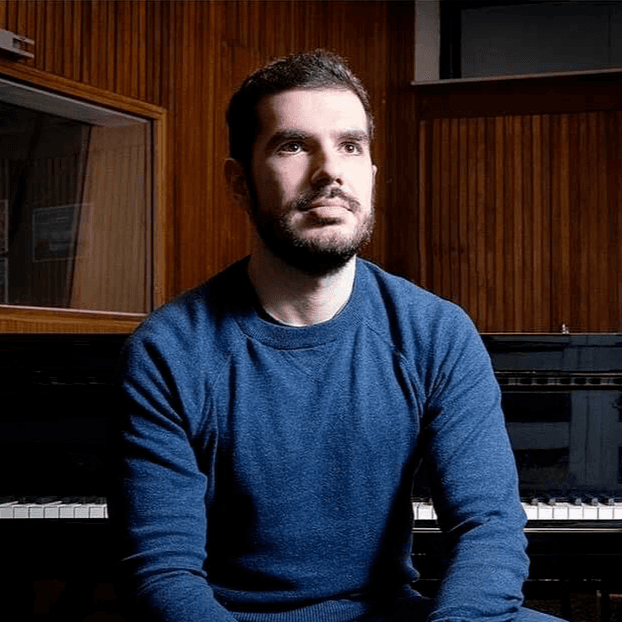
Umut Eldem
Umut Eldem is a composer, pianist, and researcher. His musical works and research focus on the exploration of synaesthesia as an artistic medium. He has given lectures on his research of synaesthesia, and had his audiovisual works and installations combining sound and colours presented in Belgium, Turkey, Romania, Russia, and Luxembourg. Umut Eldem is currently a PhD researcher at the Royal Conservatoire of Antwerp, and musical director of the theatre collective Mixed & United. He gives lessons and workshops on music history, musical analysis, and audiovisual design. He is also the keyboardist of the bands Starblind = Earthbound and Transport Aerian. His current PhD research entitled ‘The Hearing Glass: Synaesthetic Correspondences in The Musical Practice’ intends to take the results of his previous research and develop them into an inter-sensory theory of audiovisual art.