For centuries, musicians have incorporated chance-based elements into their compositions, first through coin flips and dice rolls and more recently through computer software. Today, building music-oriented algorithmic systems is easier than ever with Max.
Creative Coding
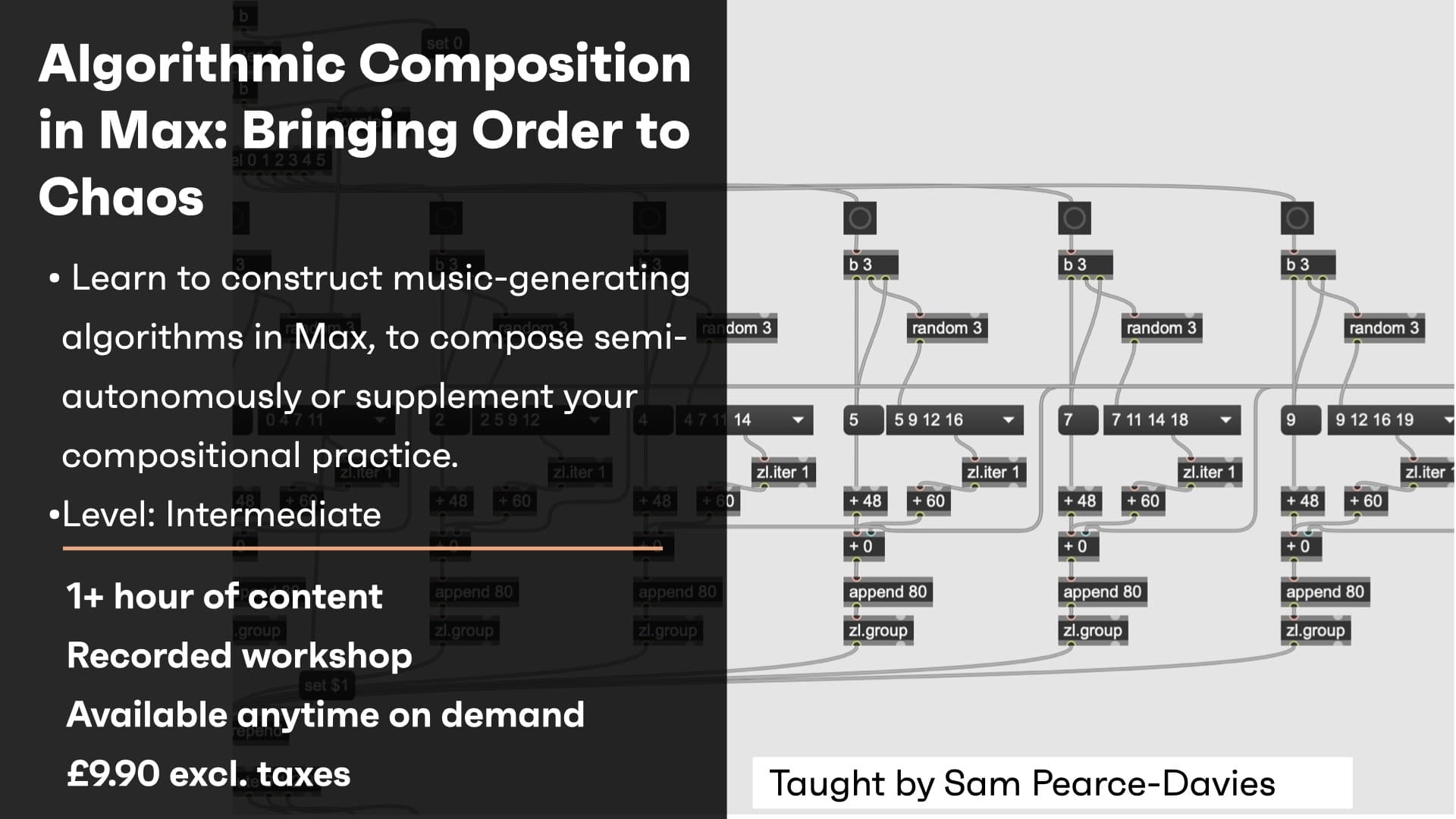
Algorithmic Composition in Max: Bringing Order to Chaos
Build an algorithmic composition patch in Max, generating melodies, ostinatos, chord voicings and sequences across multiple synth voices, then structure them into a finished piece.
Course overview
Learning outcomes
By the end of the workshop you will have built a system for algorithmically generating a short multi-instrumental composition which you will be able to go on to improve and expand upon to fit your own preferences.
Who is this course for?
- • Learn to construct music-generating algorithms in Max, to compose semi-autonomously or supplement your compositional practice.
Requirements
- • You should be comfortable with the general workflow and data formatting in Max
- • Knowledge of MIDI format and routing to DAWs (Ableton, Logic etc) would be a plus, although Max instruments will be provided
- • A basic familiarity with Git, C++ and audio processing
- • You should have some basic knowledge of music theory: chords, scales, modes etc
Course content
Course Overview
2 lessons
+
Course Overview
2 lessons
What you will learn in this course
What you will learn
In this workshop you will learn a variety of algorithmic processes and useful tools to construct your own systems: including drunken walks, list manipulation and step-sequencer pattern generation. Primarily focusing on MIDI-controlled instruments, you will gain an understanding of how chance can be factored into numerous aspects of composition, from melody and harmony to overall piece structure and instrumentation.
By the end of the workshop you will have built a system for algorithmically generating a short multi-instrumental composition which you will be able to go on to improve and expand upon to fit your own preferences.
Composing with randomness
For centuries, musicians have incorporated chance-based elements into their compositions, first through coin flips and dice rolls and more recently through computer software. Today, building music-oriented algorithmic systems is easier than ever with Max.
- Requirements
Algorithmic Composition Workshop
9 videos, 1 resource
+
Algorithmic Composition Workshop
9 videos, 1 resource
- Max patches
Part 1 - MIDI Setup & Guitar Synth
Checking access...Part 2 - Sequencer Setup
Checking access...Part 3 - Basic Melody Generation
Checking access...Part 4 - Bell Synth Setup
Checking access...Part 5 - Ostinato Generation
Checking access...Part 6 - Chord Voicing Generation & Organ Synth
Checking access...Part 7 - Chord Sequence Generation
Checking access...Part 8 - Transport Setup
Checking access...Part 9 - Piece Structuring and Final Composition
Checking access...
Instructors
Sam Pearce-Davies
Samuel Pearce-Davies is a composer, performer, music programmer and Max hacker living in Cornwall, UK. With a classical music background, it was his introduction to Max/MSP during undergraduate studies at Falmouth University that sparked Sam’s passion for music programming and algorithmic composition. Going on to complete a Research Masters in computer music, Sam is now studying a PhD at Plymouth University in music-focused AI.